Branding
Commercial Real Estate Branding: From Logo to Listing Materials
A practical guide to CRE positioning, logo design, brand identity, and rollout. See how a brokerage identity carries into websites, signs, and offering materials.
In this field note
A commercial real estate brand has to work in many places: a broker introduction, a listing presentation, a property sign, a mobile website, and a detailed investment document. The useful question is whether all of those moments make the same business recognizable and its expertise clear.
Start with the business you want people to understand
A useful branding brief starts with clients and assignments. An industrial leasing team, a boutique investment-sales firm, and a mixed-use developer may share an industry, but their audiences need different information. Decide which audience comes first before choosing a visual direction.
Write a short positioning statement with four parts: who you help, what work you do, where your expertise applies, and what evidence supports it. “We advise industrial owners on leasing and dispositions in our established market” gives a designer and copywriter more direction than “a premier full-service firm.” The evidence might be a verified assignment, a documented process, or a specific capability. Use only what the firm can support.
Then identify the practical problem. Perhaps the firm has grown beyond a founder’s personal reputation. Perhaps individual brokers have created inconsistent materials. Or perhaps the business is entering a new service line. The answer determines whether the project needs a focused logo refresh, clearer messaging, or a broader identity and website engagement.
- Primary audience and priority assignments
- Services and markets the firm actually covers
- Verified reasons to trust the team
- Materials that create the most inconsistency today
- The people who will approve and use the new identity
Define what the logo needs to do
Logo design is one part of a brand identity. A useful delivery includes the approved wordmark, any companion mark, suitable horizontal and stacked arrangements, and versions for light and dark backgrounds. Typography, color, spacing, image direction, and layout rules give those marks a consistent environment.
Evaluate the design in the places where it will be used. Put it on a phone screen, an email signature, a one-color document cover, and a property sign. Read the business name at a small size. Check that a reversed version remains legible. A beautiful presentation on a large screen can conceal problems that appear immediately in daily use.
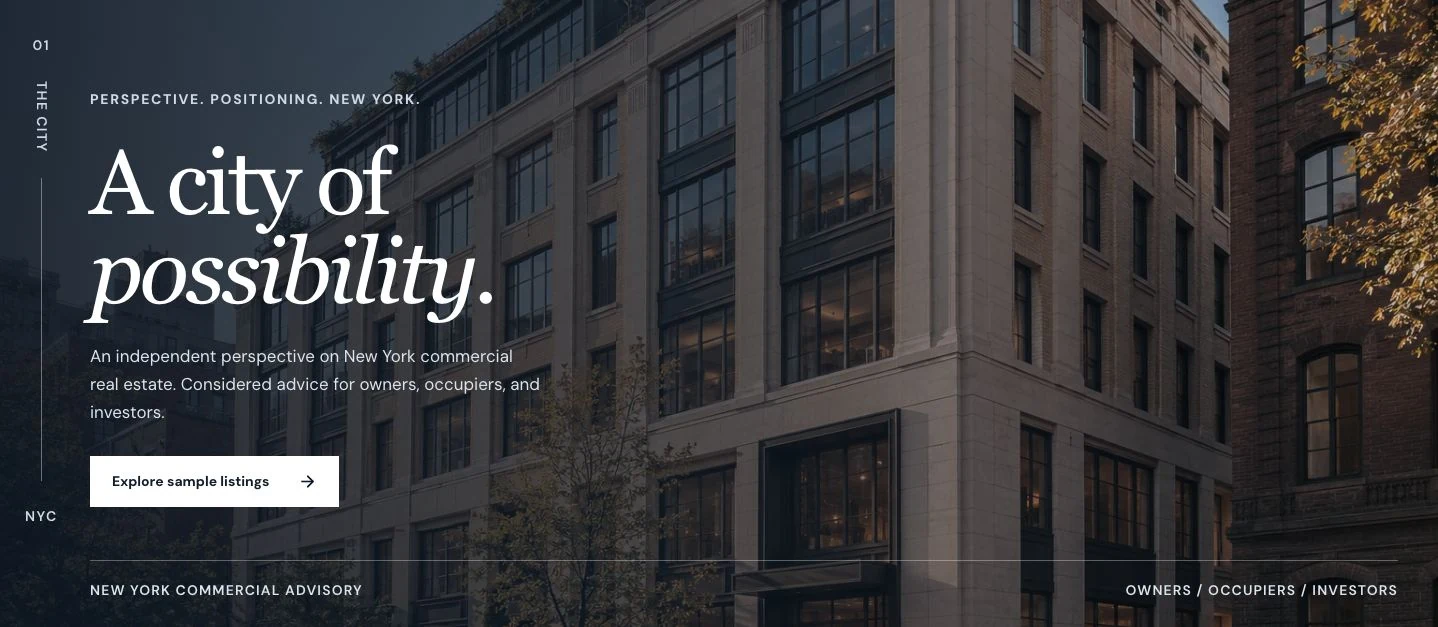
For our fictional Mercer Commercial study, the wordmark establishes the main identity. Navy and ivory connect the brokerage website, email signature, business card, and campaign layouts. The website preview is captured from the working prototype, which uses AI-generated architectural imagery. The study demonstrates an identity in use; it is not a client engagement or a measured business result.
Approve the identity in realistic applications. A logo presentation should help you judge how the business will appear in use.
Give the firm and the property clear roles
The brokerage brand tells the reader who is advising them. The property identity helps them recognize an opportunity. Both need room to work. A property brochure can have its own name, image direction, and accent color while retaining a consistent brokerage endorsement and contact system.
Define the relationship before the next listing. Decide where the brokerage logo appears, how the property name is treated, which information stays consistent, and what can vary by assignment. Otherwise every new property becomes another round of informal brand decisions.
The same principle applies to a developer with several properties or an investment firm with multiple strategies. A simple hierarchy can connect the organization and its offerings while giving each page a clear purpose. The appropriate structure depends on the actual business, so settle it in the brief rather than defaulting to a new logo for every initiative.
Build a small set of materials the team will use
A brand becomes useful when the team can apply it without recreating the design each time. Start with the materials that appear most often in the client journey. For one firm that may be listing presentations and property signs. For another it may be investment teasers, offering memorandums, and the website.
Define editable areas and fixed rules. A listing template should make it easy to replace a property image, update approved facts, and change contact details. It should also protect logo spacing, heading hierarchy, and readable financial tables. Test it with a long property name and an imperfect photograph, not only the shortest headline and ideal image.
Treat content as part of the system. Give the team approved language for the firm introduction, service descriptions, broker biographies, and common calls to action. Keep factual claims tied to a source and an owner who can confirm when they need updating.
- Business card and email signature
- Brokerage or property website
- Listing presentation and proposal
- Property flyer, sign, and offering memorandum
- Email campaign and social post templates
- A short usage guide and organized source files
Carry the identity into a website people can navigate
A coordinated website combines the identity with a useful information structure. A visitor should be able to find the firm’s services, understand its geographic and property focus, review appropriate work, and reach the right person. Strong typography and photography support those tasks.
Plan the brand and website together when the same business questions affect both. Positioning informs the homepage, service pages, navigation, and inquiry form. The visual system informs buttons, property cards, documents, and mobile layouts. This reduces decisions that otherwise get repeated across separate projects.
If an existing website is being replaced, preserve useful URLs where possible and map retired pages to relevant destinations. Check the final pages, documents, and inquiry path before distributing the new site. Brand launch announcements should send people to a complete experience.
Agree the deliverables before production begins
Ask for a written scope that names the discovery work, design directions, revision process, applications, master files, and handover. Separate design from printing, photography, copywriting, website development, and ongoing campaign work so responsibilities are clear.
A useful handover includes organized master artwork, common digital exports, color specifications, font information, spacing guidance, and the agreed templates. Confirm which tools the team needs to edit those materials. The right format depends on the people who will maintain the work.
Make rollout an explicit step. Assign owners for the website, signs, social profiles, email signatures, listing materials, and archived templates. Keep one approved source location and identify the date after which new work should use the refreshed system.
Review consistency and useful inquiries after launch
Begin with practical checks: are brokers using the approved materials, can the team produce the next listing without rebuilding the layout, and do mobile visitors understand the offer? Collect specific feedback from people who use the identity and from prospects who encounter it.
For the website and campaigns, review relevant service-page visits, completed inquiries, and the quality of the conversations that follow. Those observations can guide the next improvement. A new identity alone does not establish that branding caused a change in revenue or lead volume.
Made for CRE connects brand strategy and logo design with brokerage websites, property materials, content, SEO, and paid-search planning. Our Mercer, Pacific, and Fulton studies let you inspect how those disciplines work together before discussing the scope of your own project.
Explore the work and services
Ideas for your next website or property campaign?
We would be glad to help you bring them to life.

Good work starts with a conversation
Put the thinking to work.
Connect your brand, digital presence, and next campaign with a marketing partner focused on commercial real estate.